Ego Fishing And Fall Walleyes
Sep 23rd, 2025 by Chris Munchow
Modified Sep 23rd, 2025 at 1:01 AM
Fall Walleye Plays
Timely tips for capitalizing on some of the best walleye fishing of the year
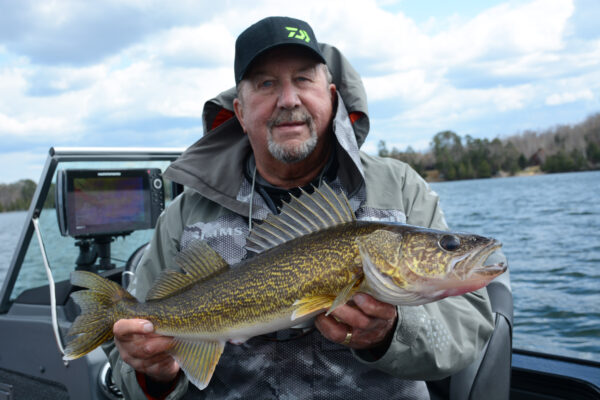
CALDWELL, ID (September 22, 2025) – It’s that time of year again. Kids are back at school, football’s
started, and fish will soon be putting on the feed for the long, cold months ahead. And while the pull for
the avid outdoorsman or woman can be to ready for birds, bucks, field, and forest, serious walleye
anglers know it’s also time to be on the water.
While we’re in the summer-fall transition right now and fish are starting to make moves, the best
walleye fishing takes place when waters hit the upper to mid-50s. This is when they begin aggressively
targeting baitfish like shad, perch, and fall-spawning tullibees (cisco), often roaming shallow from dusk
and throughout the night putting on the feed.
Location, Location, Location
Fall days can be epic, as long as you’re in the right place. Expect autumn walleyes to hold near main lake
points, drop-offs, and structures like rock piles and gravel bars near deeper water where they can
ambush prey and rest to metabolize food.
Moving water is also a fall magnet, with walleyes chasing migrating baitfish into adjoining creeks and
rivers on lakes. But, as mentioned, come nighttime, anticipate walleyes moving into as little as 2-8 feet of water near
shorelines, especially windswept shores. On rivers, you will find the same phenomena, with walleyes
intercepting food along shallow rock, creek inlets, river bends, wingdams, and riprap.
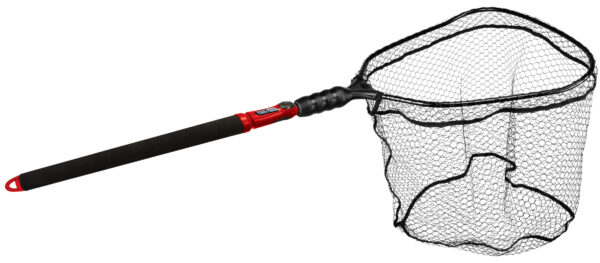
Get the Net!
The gold in a walleye goes deeper than its skin – it’s the meat. Prized for its fantabulous flaky white
fillets, nothing’s more painful than seeing a walleye at boatside return to the depths for lack of a landing
net. EGO Fishing offers the most comprehensive assortment of specialized and sophisticated landing nets on
the market. Typically, walleye enthusiasts opt for large to XL hoop sizes in the S2 Slider series, meshing
based on preference. The most popular netting choice, however, is PVC coated with a flat bottomed
basket. The flat bottom cradles a fish for easier handling, while the PVC coating prevents physical
damage to upsized walleyes that might qualify for release. Also, the same PVC coating does a fine job of
keeping hooks free from perma-snag.
Troll Right Now
Although it’s fallen by the wayside with FF sonar, trolling is still an incredibly effective way to catch
walleyes, especially now with water temps sliding into the 60s and down into the upper 50s. You can still
use your electronics, but rather than sniping individual fish, look for schools of baitfish cruising the open
basins and either longline or use leadcore to pull crankbaits or spinners, the latter with a minnow
instead of a ‘crawler, something a lot of anglers don’t do anymore.
Jigging Just Produces
Again, during the day, use your electronics to find vertical structure, deep breaks, and vertically jig those
areas. ¼- to 3/8-ounce jigs tipped with lively minnows are hard to pass up. On river systems, find current
seams, pools, or eddies, and concentrate on boat control, keeping your line as vertical as possible or in
position to pitch to promising areas. Veteran Minnesota Fishing Guide, Tom Neustrom, is a master at jigging and loves what fall brings to his boat each year. “When water temperatures drop from 70 to 75 degrees, that gets the walleyes moving. I move back to jig fishing because you’re keying in on pods of fish again, and I think that’s the important thing to know
about the transitional period—when the temperature starts to drop the fish start to feed, so you really
need to monitor the water temperature.” Neustrom is a fan of jigging in fall because he can cover water quickly and key in on active fish. “In terms of depths, I ascribe to the spring forward, fall back saying, meaning move shallow during the
day in the spring and move deeper during the day in the fall. We’re not in the six, eight, or ten feet we’d
be jigging in the spring. I’m looking for fish in 25 to 35 feet of water in the fall during the day – as well as
the edges of deep water to shallower water, say 12 to 20 feet of water,” noted Neustrom.
“In the fall, it’s crucial to pay attention to depth breaks. When you’re looking at your LakeMaster map or
whatever map you’re using, you want to key on major points that dip into deep water and start fishing
right on the edge. I’m a really big fan of jigging points in the fall.”
Pitching Programs
Rapala Jigging Raps and Rippin’ Raps, Northland Pitchin’ Puppet, and bladebaits are also fall favorites,
with bladebaits really shining on rivers where the water may be turbid and you need the vibration to
attract fish. And on lakes and rivers, chunky paddletail and jighead combos are also consistent
producers, but you’ll have to experiment with the retrieve. Sometimes, walleyes want them
ripped—other times fished on a moderate, straight retrieve. For the latter, underspin jigheads are
recommended for extra flash and attraction.
Cast Cranks
Casting crankbaits like DAIWA’s SC Shads, Rapala Shad Raps, and Berkley Flickr Shads provide another
avenue to explore, working shallow flats and still-green weededges. And stickbaits like the DAIWA HMKL
Minnow and Rapala Husky Jerks, well, they’re a staple for flinging in shallow water at night, which we’ll
discuss below.
Live Bait Rigging
One of the deadliest ways for catching walleyes in fall on lakes? Rigging fat, lively creek chubs or redtails
on a slip sinker rig. Drag slowly over breaklines or points. Post-turnover—when dissolved oxygen is more evenly dispersed throughout all depths—walleyes can be literally anywhere. Most anglers still target steep breaks, sunken islands, points, etc., but Minnesota guide, Brian “Bro” Brosdahl is fond of fishing shallower. “A majority of my fall live bait rigging is done in 10’ and less,” said Bro. “Especially around rock, from softball- to Volkswagen-sized boulders to jagged shield rock. On rivers, you’re talking submerged riprap, wingdams, and other soft-to-hard bottom transitions.”
Just remember to set the hook after a brief countdown and with a slow sweep. Bro encourages anglers to use the first couple bites to determine the best hook-setting procedure. “If you get a bite and pull on it and the fish is already hooked, you know they’re eating it. Don’t overfeed the fish. There’s no reason to pull their butthole out the mouth. Most of the time, I’m feeding them for around 5 seconds. The only exception is if I’m using giant chubs—then I’ll give ‘em a bit longer.”
Bro continued: “When I feel a hit I’ll feed line, then I’ll check before I set the hook, pulling the chub a
little bit – maybe a couple short pulls so the walleye eats it a bit more. I call this the ‘tease.’ Teasing
walleyes a little bit really gets them to commit. Big walleyes are like ‘give me my steak back!’ Even in
tournament situations when I watch guys feed fish for minutes, all it takes is a little tease.”
The exception is rigging during extreme high-pressure situations when the tease can turn some walleyes
off. “If they don’t eat after the tease, they’re typically small fish. But bug the big fish and they’ll gobble
almost every time, even during post-frontal conditions.”
Night Fishing
In fall, with walleyes moving shallow after dark, casting stickbaits or swimbaits over sand, gravel, or
sparsely weeded flats can be dynamite – again, especially areas where the wind has been blowing into
for a sustained period or near creek mouths and points. The nice thing about walleye night fishing in fall is you don’t really need a boat, just a couple of spinning rods, a small box of stickbaits, pliers, your waders, headlamp, and a good net, like an EGO Large Wade model that will clip easily to a lanyard or over your shoulder. While all the methods above will work for
fall walleyes, this is our favorite!
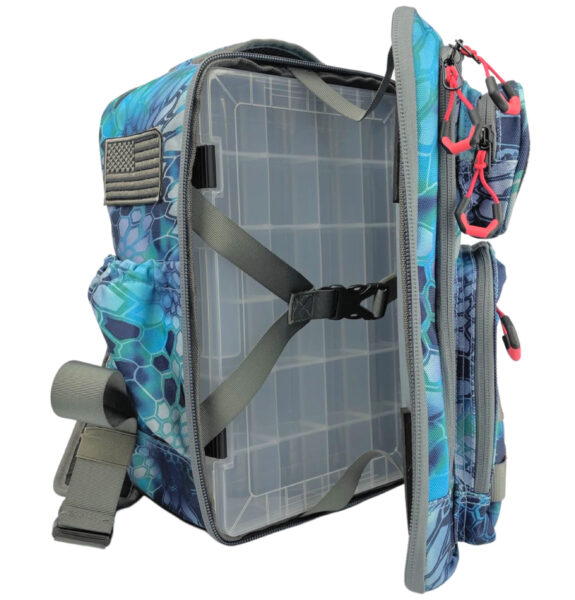
Organizing all that SH#T
The aggregate of the aforesaid lures and terminal tackle would seem heavy enough to flip a boat.
Truthfully, though, they can be stored and transported in two, maybe three 3700-size utility tackle trays.
Maybe a jig box, rig box, and hardbait box. Go ahead and mark ‘em with a Sharpie, too.
And it’s your lucky day… EGO’s Kryptek Tackle Box Sling Pack handily holds a trio of 3700 utility boxes, in
fact, comes with them. Besides the included boxes, the rugged sling pack features storage pockets
galore, molle loops, comfortable and adjustable strap, and rod holder.
ABOUT EGO Fishing
Fourteen years ago, we set out on a simple mission – to develop a better fishing landing net solution
that addressed the many functional and performance problems that existed with the traditional
products. What started out as a small landing net company has now grown into the innovation leader in
the fishing net and accessories category of the sport fishing industry. EGO products are sold at most
major sporting goods retail chains and are carried by a large network of distributors and independent
dealers in the United States. Distribution has also grown internationally to include countries such as
Canada, Russia, South Africa, South Korea and Japan.
MEDIA CONTACT:
Noel Vick
Traditions Media
[email protected]