Urban Ice Fishing 101
Dec 28th, 2025 by Chris Munchow
Modified Dec 28th, 2025 at 12:43 AM
Urban Ice Fishing 101
How to start the year off right by getting outside and on top of local fish!
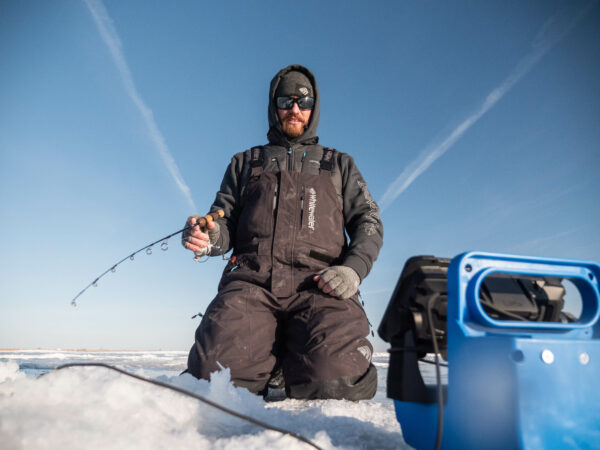
MUSKEGON, MI (December 31, 2025) – When most people think of ice fishing, evergreens and northern
climes come to mind. And while that’s part of the sport, there are opportunities a lot closer to home for
day trips that can be equally as rewarding. That’s a boon for the multitudes who live in and near cities or
larger towns throughout the Ice Belt.
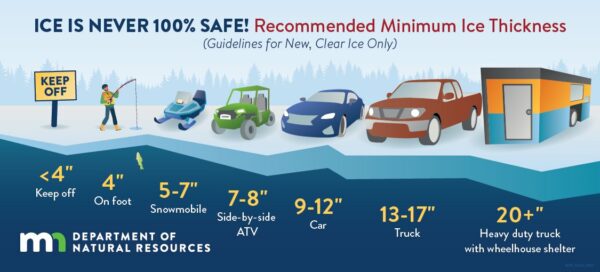
Given suitable, safe ice thickness, there’s plenty to explore close to many metropolitan centers. The
same lakes and ponds you fished during open water are now ripe for hardwater action, yet all but a
handful of ice anglers utilize the natural resources to their potential. River backwaters are also a
possibility, but you need to exercise additional caution as ice may vary significantly not only from day to
day with rising and falling river levels, but hour to hour.
#1: Know the Rules Before You Go
Urban waters often have special regulations. First, confirm it’s legal to ice fish the specific body of water.
Some cities ban ice fishing altogether as a safety precaution, although that’s rare throughout most of
the Ice Belt. Lastly, check species rules, size limits, and seasons. City parks departments and state fish &
wildlife websites will generally spell out everything you need to know.
#2: Urban Ice Safety
Urban ice can be less predictable because of runoff, culverts, fountains, aerators, and bridges. If
conditions look questionable, stay on shore. But if conditions look favorable, use a spud bar to check the
thickness of the ice ahead of you as you venture out. Second, always fish with a buddy and carry a
throw-rope and wear ice picks. Wearing an approved PFD is another good idea. And cleats worn over
boots can prevent slippage and possibly hitting your head.
#3: Keep Gear Simple
Sled: Besides your spud bar, you’ll want a sled to pull your gear out on the ice. This can be a
specially-designed ice fishing sled or a repurposed kid’s sled or toboggan.
Ice Auger: To drill the holes you’ll be fishing in, anything from a hand auger to a lithium battery
powered auger will work great. Here’s a tip: with little investment, you can get a 6- or 8-inch
drill bit that locks into the chuck of any lithium-powered power drill and will work great while
reducing weight. Cheaper than a dedicated battery-powered auger, it allows use in the winter,
and the drill goes back into the workshop for the open-water season.
Ice Hole Scoop: You’ll need this to clear your hole of ice shards and provide debris-free fishing.
Light/Ultra-Light Ice Rod Combo: Companies like DAIWA, Eagle Claw, CLAM, HT Enterprises, and
numerous others offer ice rod and reel combos, many already spooled with 4- or 6-pound
monofilament.
Tackle: For most urban fishing, you don’t really need more than a few small jigs and/or micro-
spoons.
Bait: A container of waxworms or maggots will work best for tipping your jig or spoon, and
catches a variety of different fish besides panfish, often seducing willing bass, walleye, and the
occasional small- to medium-sized pike.
5-Gallon Bucket: If your plan is to keep some fish for table fare, nothing beats a bucket to put
the fish in. And upside down, it also makes an extremely portable seat on the ice, reducing the
amount of time kneeling at the hole.
Fish Finder: While not necessary, a mechanical flasher like a Vexilar or MarCum can be a big
help to know the depth you’re fishing, see your lure, and reveal if fish are in the proximity. With
the advent of new technologies like Forward-Facing sonar on the ice, intro-level flashers have
come down in price significantly. If you have a smaller (9” and under) digital graph on your boat,
consider putting it in a shuttle for the winter and using on the ice with the addition of an ice
puck transducer available at most fishing retailers.
Fishing Apps: Need help finding productive spots to fish? In the old days we used paper maps
typically printed from a state fish & wildlife website. And while paper maps are still valuable,
there are a ton of fishing apps available that put the map on the scene and contain functionality
to help you plot a GPS course to areas that look good before you ever step foot on the ice.
Fishbrain Pro is thoroughly advanced app that provides access to millions of catch locations,
high-resolution depth charts from Garmin®, and AI-powered fishing spot prediction. Be
prepared for your next fishing trip with intel on weather conditions, and, most importantly,
what bait anglers use to catch specific species. Also reveals if you can legally fish in a certain
area and know how to comply with local regulations to fish in a sustainable way and never get a
ticket. Keep all your catches organized in your own logbook. OnX Fish is another option.
#4: Prepare for Multispecies Fun
Most urban waters contain panfish (sunfish, crappies, perch) and bass, but some waters also hold
walleye and pike, besides catfish and even white bass or yellow bass in some areas. While it’s easy
to say you’re only targeting a specific species, urban fishing often turns out to be a hodge-podge of
fish.
Positioning yourself near drop-offs, weedlines, or shoreline points is a good strategy to start
sampling what’s biting.
#5: Stay Warm, Stay Out Longer
While fishing from a portable fish house can be fun, it’s not always practical on urban waters where
you really need to stay on the move to find fish and stay out of the way of skaters and dog walkers
also enjoying the ice. A better move – which also reduces the amount of gear you need – is to wear
your fish house.
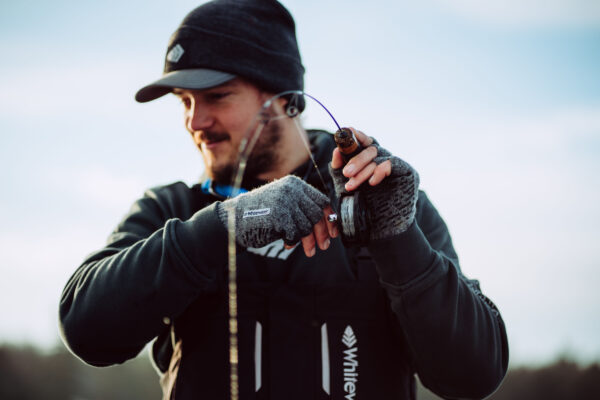
Today’s high-tech ice fishing winter wear, like Whitewater Fishing’s Great Lakes Insulated Pro jacket
and bib are built for layering and keeping you comfortable no matter how cold it gets. A good plan is
to wear thermal long-johns under the bib and jacket with something like Whitewater’s Buoy HD
Hoodie and/or a Whitewater Torque Heated Fishing Vest over the top for complete, battery-
powered temperature control.
#6: Be A Good Urban Ice Fishing Steward
Like camping on land, the rule here is pack in – pack out. That means no garbage left on the ice!
Besides the holes drilled, make sure you leave the site and the way you discovered it – or in even
better condition. This will ensure the city where you live maintains open access to the ice for others
to explore.
Take Home
Fishing urban ice can be as simple or as complicated as you make it, but we advocate the former to
the latter. Go out, drill some holes, jump around the lake or pond, and see if you can find willing
biters! It’s a great way to get off the couch in the winter without having to plan an elaborate trip “up
north” or to some far-off destination – or, at least, consider it practice for those earmarked trips to
places like Devils Lake, ND, Lake of the Woods, and areas around the Great Lakes.
One last recommendation: If you have pike, walleye, or bass in the urban lake or pond you intend to
fish, think about bringing a tip-up (where two lines are legal), and pick up a half-dozen large
minnows like suckers. Setting a tip-up a couple paces away from where you’re jigging is a great way
to build anticipation in the prospect of a larger fish, which a lot of urban waters do have. And if your
urban fishing group is large, consider several tip-ups and the same game plan. There’s nothing like
sprinting toward a tripped flag and setting the hook on a plus-sized fish after catching smaller
panfish all day!
Now, get out there and explore! And have a great winter!
ABOUT NEXUS OUTDOORS
Nexus Outdoors, headquartered in Muskegon, MI, USA, is a leading worldwide designer, marketer
and distributor of performance, hunting and casual odor-controlling apparel, footwear and
equipment under the ScentLok Technologies®, OZ®, Blocker Outdoors®, Whitewater Fishing®
Hardcore® Waterfowl and Tree Spider® brands. It also owns American Range Systems, manufacturer
and distributor of the world’s strongest and safest bullet traps. Nexus Outdoors is the only company
with access to all scent-controlling technologies, including their patented Carbon Alloy TM and Cold
Fusion Carbon TM technologies, which provide superior success in the field. ScentLok and Blocker
Outdoors are pioneers in the hunting industry, which many credit with creating a market focused on
superior scent control to get closer to big game.